English
 日本語
日本語 中文
中文

Industry News
Home / News / Industry News / What Are Stainless Steel Butt Weld Fittings and Why Are They Critical?
News
 Home / News / Industry News / What Are Stainless Steel Butt Weld Fittings and Why Are They Critical?
What Are Stainless Steel Butt Weld Fittings and Why Are They Critical?
 2025.12.17
 Industry News
Content
- 1 Introduction: The Backbone of High-Integrity Piping Systems
- 2 Types, Standards, and Specifications: A Detailed Guide
- 3 The Welding Process: Techniques and Best Practices
- 4 Advantages Over Alternative Connection Methods
- 5 FAQ
- 5.1 What is the difference between Schedule 10, 40, and 80 stainless steel fittings?
- 5.2 Why is back purging so important when welding stainless steel fittings?
- 5.3 How do I choose between 304L and 316L stainless steel for my fittings?
- 5.4 What are stub ends, and how are they used with butt weld fittings?
- 5.5 What Non-Destructive Testing (NDT) is common for butt welds?
- 6 Conclusion: The Foundation of Reliable High-Performance Piping
Introduction: The Backbone of High-Integrity Piping Systems
In the world of industrial, chemical, pharmaceutical, and food processing piping, the integrity of the system is paramount. Wherever the transport of fluids, gases, or steam demands absolute reliability, leak-tight seals, and resistance to corrosion, pressure, and temperature extremes, Stainless Steel Butt Weld Fittings are the preferred connection method. Unlike threaded or socket weld fittings, butt weld fittings are designed to be welded directly to the pipe and to each other, creating a continuous, homogeneous piece of metal. This method involves beveling the pipe end and the fitting to create a "V" groove, aligning them precisely, and then filling the groove with weld material. The result is a joint whose strength and corrosion resistance often exceed that of the base pipe itself. These fittings—including elbows, tees, reducers, and caps—are manufactured to strict dimensional standards (such as ASME B16.9) from austenitic stainless steel grades like 304/304L and 316/316L, chosen for their excellent mechanical properties and resistance to a wide range of corrosive environments. They form the essential, permanent junctions that allow piping systems to change direction, branch off, or change size, all while maintaining system integrity under demanding service conditions.
- Core Principle: Permanent, homogeneous metal connection achieved by welding the beveled end of a fitting directly to the beveled end of a pipe.
- Primary Advantage: Creates a smooth, flush interior with minimal flow restriction and no crevices for corrosion or contamination, offering superior leak integrity and long-term reliability.
- Key Industries: Indispensable in oil & gas, chemical processing, power generation, pharmaceuticals, food & beverage, and semiconductor manufacturing.
Types, Standards, and Specifications: A Detailed Guide
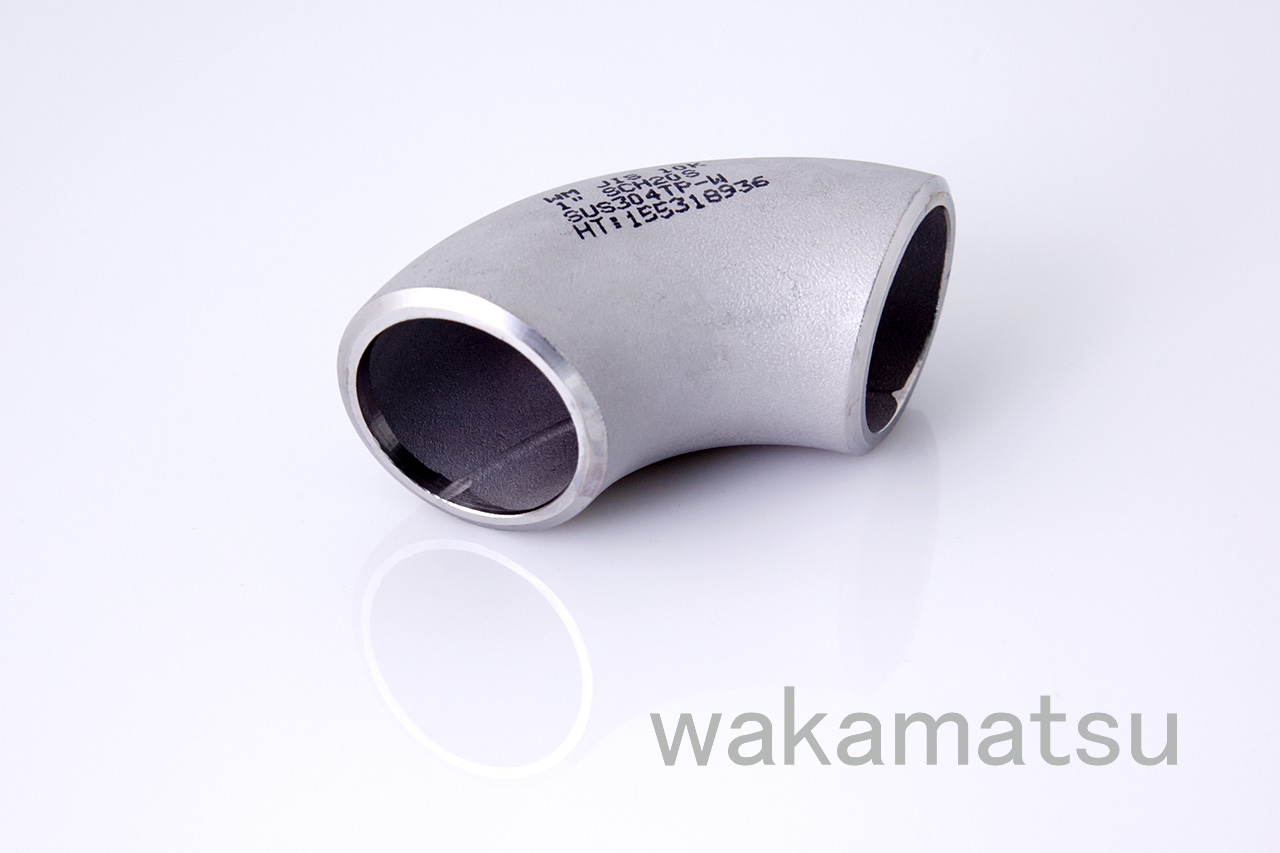
The family of Stainless Steel Butt Weld Fittings is extensive, with each type serving a specific function in routing a piping system. Elbows (90° and 45°) change the direction of flow. Tees (Equal and Reducing) allow flow to be combined or split into two directions. Reducers (Concentric and Eccentric) connect pipes of different diameters, with concentric reducers maintaining the centerline and eccentric reducers used to keep pipe tops or bottoms level. Caps seal the end of a pipe. These fittings are manufactured to precise dimensional standards, most commonly ASME B16.9 (Factory-Made Wrought Butt-Welding Fittings) in North America and EN 10253-3 or DIN 2605 in Europe. Compliance with these standards ensures interchangeability between manufacturers. Equally critical are the material specifications. The most common grades are AISI 304L for general corrosion resistance and AISI 316L for enhanced resistance to chlorides and acids, with the "L" denoting low carbon content to prevent sensitization (carbide precipitation) during welding. Other grades like 321 (stabilized with titanium) or duplex steels like 2205 are used for high-temperature or high-strength/corrosion applications, respectively.
| Fitting Type | Primary Function | Key Variants & Notes |
| Elbow | Changes the direction of the pipe run. | 90° (most common), 45°, and custom angles (e.g., 30°, 60°). Long Radius (LR) and Short Radius (SR) define the centerline curvature. |
| Tee | Creates a branch connection from a main pipeline. | Equal Tee (all outlets same size), Reducing Tee (branch or run outlets differ). Straight Tees and Reducing Outlet Tees (ROT). |
| Reducer | Connects pipes of two different nominal diameters. | Concentric Reducer (symmetrical, conical). Eccentric Reducer (one side flat, used to avoid air pockets or maintain baseline). |
| Cap | Seals the end of a piping system. | Hemispherical, elliptical (dished), and flat shapes available for different pressure ratings. |
| Stub End | Used with a lap joint flange to create a bolted, disassemblable connection that mimics a butt weld. | Manufactured to MSS SP-43; allows easy alignment and is cost-effective for systems requiring frequent disassembly. |
The Welding Process: Techniques and Best Practices
The performance of a Stainless Steel Butt Weld Fitting is only as good as the weld that joins it. Proper welding is a critical, skilled operation. The process typically begins with precise fit-up: the pipe and fitting must be aligned with minimal internal misalignment (hi-lo) to ensure a smooth flow path and even weld penetration. The ends are beveled, usually to a 37.5° angle, leaving a slight root face. For most critical applications, Gas Tungsten Arc Welding (GTAW/TIG) is the preferred method for the root pass (the first weld layer) due to its excellent control, cleanliness, and ability to produce a smooth, uncontaminated interior bead. Subsequent filler passes may use GTAW or Shielded Metal Arc Welding (SMAW/Stick). A critical requirement for stainless steel is back purging—flooding the interior of the pipe with an inert gas (like argon) during welding to prevent oxidation (sugaring) on the backside of the weld, which would severely compromise corrosion resistance. The use of proper filler metals (e.g., ER308/308L for 304L base metal, ER316/316L for 316L) is mandatory to match or exceed the corrosion and mechanical properties of the parent material. Post-weld, cleaning to remove heat tint (discoloration) and any slag is essential to restore the passive oxide layer that gives stainless steel its corrosion resistance.
- Pre-Weld Preparation: Includes beveling, cleaning (removing oil, grease, oxides), and precise alignment using clamps or tack welds.
- Welding Technique: GTAW (TIG) for root and hot passes provides best quality; SMAW (Stick) or GMAW (MIG) may be used for fill and cap passes on thicker schedules.
- Critical Controls: Maintenance of proper interpass temperature, use of dedicated stainless steel tools to prevent iron contamination, and rigorous back purging for all root passes.
- Post-Weld Treatment: Removal of heat tint via mechanical brushing (with stainless steel brushes only) or chemical pickling/passivation to restore the corrosion-resistant passive layer.
Advantages Over Alternative Connection Methods
The selection of butt weld fittings over other connection types like threaded, socket weld, or flanged joints is driven by specific performance requirements. The most significant advantage is the permanent, leak-proof integrity of a fully penetrated weld, which is ideal for high-pressure, high-temperature, or hazardous service. The smooth, crevice-free bore minimizes pressure drop, prevents turbulence, and eliminates sites where corrosive media or bacteria could accumulate—a critical factor in sanitary (food, pharma) or corrosion-prone services. Butt weld systems are also more compact and lightweight than flanged systems, requiring less space and support. Over the long term, they offer superior durability and lower maintenance, as there are no gaskets to replace or threads to corrode and leak. While the initial installation requires more skilled labor and time for welding and Non-Destructive Testing (NDT), the total lifecycle cost is often lower due to unparalleled reliability. However, the permanent nature of the connection is also a limitation where future modification or disassembly is anticipated, which is where flanged connections or the use of stub ends become advantageous.
| Connection Type | Key Advantages | Ideal Use Cases / Limitations |
| Butt Weld | Strongest, most leak-tight joint; smooth bore; best for corrosion resistance and high P/T; low long-term maintenance. | Permanent installations in critical service: high-pressure steam, corrosive chemicals, ultra-pure or sanitary systems. |
| Socket Weld | Easier alignment than butt weld; good for small bore piping (NPS 2" and below); strong connection. | Small-diameter, high-pressure systems. Not for corrosive services due to crevice at root gap; requires fatigue consideration. |
| Threaded | Easy installation/disassembly without welding; economical for small sizes. | Low-pressure, non-critical services (utility air, water). Weakest connection; prone to leaks under vibration/thermal cycling; crevice corrosion risk. |
| Flanged | Allows for easy disassembly, access, and modification; wide range of pressure ratings. | Systems requiring frequent maintenance, inspection, or where future expansion is planned. Bulkier, heavier, more leak points (gaskets, bolts). |
FAQ
What is the difference between Schedule 10, 40, and 80 stainless steel fittings?
The "Schedule" (SCH) refers to the wall thickness of the fitting, which corresponds to the wall thickness of the pipe it is designed to connect. Schedule 40 is a standard weight, common for general industrial applications. Schedule 80 is an extra-heavy weight, used for higher pressure services. Schedule 10 is a lighter weight, often used in low-pressure systems or where weight savings are important (like structural applications). It is crucial to match the schedule of the fitting to the schedule of the pipe to ensure proper alignment and weld integrity. There are also special schedules like Schedule 160 and XXS (Double Extra Strong), used for extreme pressure conditions.
Why is back purging so important when welding stainless steel fittings?
Back purging is non-negotiable for quality stainless steel welding. When the root pass is welded, the intense heat can cause oxidation on the interior (root) side of the weld if oxygen is present. This oxidation, called "sugaring," appears as a rough, scaly, and dark formation. It severely depletes the chromium content in the weld metal at that critical point, destroying the local corrosion resistance and creating a prime site for pitting corrosion and eventual failure. By flooding the pipe interior with an inert gas like argon, oxygen is displaced, and the molten metal on the backside is protected, resulting in a clean, shiny, and corrosion-resistant root bead that matches the parent metal's properties.
How do I choose between 304L and 316L stainless steel for my fittings?
The choice between AISI 304L and 316L hinges on the service environment. 304L is an excellent, cost-effective general-purpose stainless steel with good corrosion resistance to a wide range of atmospheric, chemical, and food-grade environments. 316L contains added molybdenum (2-3%), which dramatically increases its resistance to pitting and crevice corrosion, particularly in chloride-containing environments (seawater, salt air, certain chemicals, and de-icing salts). As a rule of thumb, if the application involves exposure to chlorides, acids, or is in a marine environment, 316L is the required choice. For many indoor, non-aggressive chemical applications, 304L is sufficient and more economical.
What are stub ends, and how are they used with butt weld fittings?
A Stub End is a special type of butt weld fitting that is used in conjunction with a Lap Joint Flange. The stub end is butt welded to the pipe, and its flared, finished end acts as the sealing face. The lap joint flange, which has no raised face, simply slides over the stub end and rotates freely. The two are then bolted together against a mating flange with a gasket in between. This system combines the permanent, high-integrity weld of a butt-welded connection at the pipe with the easy disassembly and alignment benefits of a flanged connection. It is a cost-effective solution for systems that require frequent maintenance or where precise bolt hole alignment is difficult during installation.
What Non-Destructive Testing (NDT) is common for butt welds?
To ensure the quality and integrity of welds on Stainless Steel Butt Weld Fittings, various NDT methods are employed based on the criticality of the service. Visual Inspection (VT) is the first and most basic check for surface defects. Dye Penetrant Testing (PT) is used to find surface-breaking cracks. For subsurface and volumetric inspection, Radiographic Testing (RT) (X-ray or gamma ray) is the gold standard, providing a permanent image of the internal weld quality. Ultrasonic Testing (UT) is also used to detect internal flaws and measure weld thickness. For critical piping (e.g., in ASME B31.3 Process Piping), the code specifies the extent of NDT required based on the fluid service category.
Conclusion: The Foundation of Reliable High-Performance Piping
Stainless Steel Butt Weld Fittings represent the highest standard of connection for demanding piping systems. Their strength, corrosion resistance, and leak-tight integrity make them indispensable in industries where failure is not an option. Success with these components lies in a triad of factors: selecting the correct material grade and specification, employing skilled welding techniques with rigorous controls like back purging, and ensuring quality through proper inspection. While the installation demands expertise, the long-term payoff is a system of exceptional durability, safety, and low maintenance. From guiding corrosive chemicals through a processing plant to carrying ultra-pure water in a semiconductor fab, these fittings form the robust, seamless skeleton that makes modern industrial infrastructure possible. Understanding their proper application and installation is fundamental for engineers, fabricators, and anyone responsible for the integrity of critical fluid handling systems.
Certificate Of Honor
If You Need More Help, Let Us Know.

ABOUT US
PRODUCTS
CAPABILITY
CONTACT US
- Phone: +86-21-59261529
- Email: sales@sh-wakamatsu.com
- Email: panhy@sh-wakamatsu.com
- Add: B3 Factory , Industrial Park, Jinze Town, Shanghai, China
Copyright © Shanghai Wakamatsu Metal Products Co., Ltd.
All Rights Reserved.Custom Stainless Steel Pipe Fitting Manufacturers, Suppliers