English
 日本語
 中文


Industry News
Home / News / Industry News / stainless steel cross fitting: Applications, Selection Criteria, and Practical Guidance
News
 Home / News / Industry News / stainless steel cross fitting: Applications, Selection Criteria, and Practical Guidance
stainless steel cross fitting: Applications, Selection Criteria, and Practical Guidance
 2026.10.21
 Industry News
Content
- 1 01 What Is a Stainless Steel Cross Fitting and When Does It Pay Off?
- 2 02 Threaded vs. Socket-Weld vs. Butt-Weld Crosses: What the Trade-Offs Cost You
- 3 03 Material Grades, Dimensional Standards, and the Real Pressure Rating
- 4 04 Six Installation Mistakes That Turn a Cross into a Leak Source
- 5 05 Writing a Cross Fitting Specification Vendors Can Quote Without Callbacks
- 6 06 Frequently Asked Questions About Stainless Steel Cross Fittings
When a process line at a bottling plant is revised, replacing three tees and a short spool with a single stainless steel cross fitting removes two welded joints, one support bracket, and roughly four hours of fitter labor per manifold. That is the practical reason engineers specify a four-way cross instead of stacking multiple branch fittings.
Shanghai Ruosung Metal Products Co., Ltd., a Japanese-invested manufacturer founded in 2003 and based in Jinze Town, Shanghai, makes cross fittings as part of a full stainless steel joint family that includes threaded connectors, bite-type fittings, valves, and butt-weld fittings. For buyers, that breadth matters because material certificates, pressure classes, and surface finishes are only as consistent as the supplier's control over the whole machining chain.
01 What Is a Stainless Steel Cross Fitting and When Does It Pay Off?
A stainless steel cross fitting is a four-way pipe connector with one inlet and three outlets, or the reverse, forged from a single stainless steel blank so that flow is distributed or combined at one compact node.
The four openings sit on two perpendicular axes: opposite ports form the run, and the remaining two form the branch. An equal cross has all four openings at the same nominal size; a reducing cross uses a smaller branch, which keeps velocity higher in branch lines and reduces cost.
Definition: a four-way fitting that joins four pipes at right angles, producing a 90-degree branch in two planes from a single forging rather than an assembly of tees and elbows.
Crosses are specified wherever a header must feed three separate drop lines: cooling water distribution, fire sprinkler cross mains, compressed air ring manifolds, and chemical dosing skids. Compared with a tee-plus-elbow arrangement, the cross creates a shorter flow path, fewer welds, and one less potential leak point.
Equal, Reducing, and Threaded-End Variants
- Equal cross: all four ports identical, best flow symmetry
- Reducing cross: branch one or two sizes smaller, keeps branch velocity up
- Threaded-end cross: NPT threads per ASME B1.20.1, common in NPS 1/8 to 4
- Weld-end cross: socket-weld or butt-weld ends per ASME B16.11 or B16.9
02 Threaded vs. Socket-Weld vs. Butt-Weld Crosses: What the Trade-Offs Cost You
Connection method sets the pressure ceiling: threaded crosses are rated Class 2000 to 6000, socket-weld crosses Class 3000 to 6000, and butt-weld crosses follow the pressure rating of the pipe schedule they are welded to.
Threaded ends assemble fastest because they need only sealant and a wrench, but NPT threads concentrate stress at the hub and become the leak boundary. Socket-weld ends need a single fillet weld, yet the socket bottom retains an expansion gap that must stay vented. Butt-weld ends give full-penetration welds and the smoothest bore, which is why food and beverage lines specify them almost exclusively.
| Connection Type | Pressure Rating | Disassembly | Main Leak Risk | Best Fit |
| Threaded (NPT) | Class 2000-6000 | Yes | Thread sealant breakdown | Low-pressure cooling, instrument air |
| Socket-weld | Class 3000-6000 | No | Porosity at socket root | Hydraulic, refrigerant lines |
| Butt-weld | Pipe-schedule dependent | No | Incomplete penetration | Food, beverage, high-pressure process |
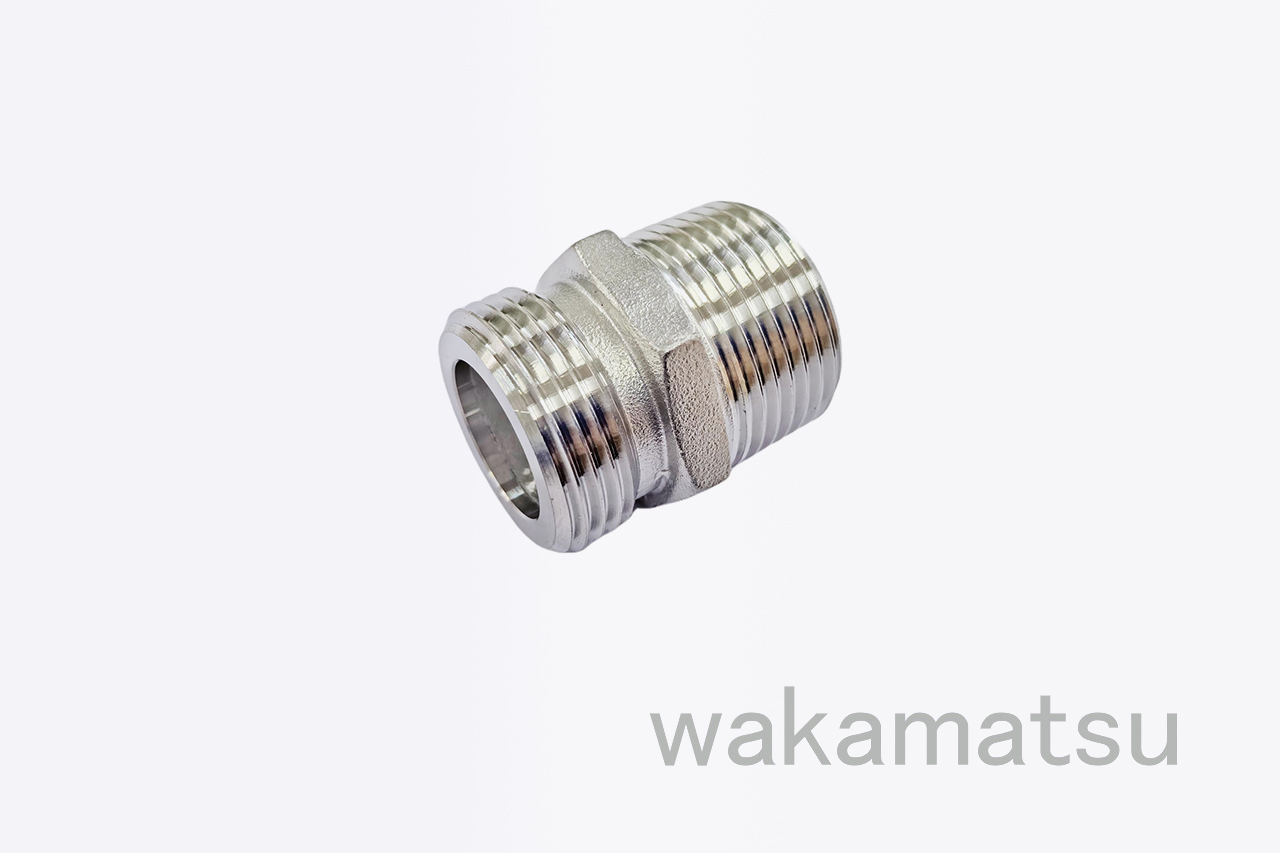 WSFG Stainless Steel Hexagonal Equal-Diameter AdapterThis threaded adapter matches NPT geometry and 304/316 materials, offering a quick-to-assemble option. Its smooth G-thread sealing surface suits lines where leak boundaries matter, making it relevant when comparing threaded versus welded connections.View Product →
A threaded cross shares the same NPT geometry and 304/316 material grades as any other threaded connector, so the supplier's threaded-line tolerance directly predicts how the cross will perform. For welded product geometry, read this guide to stainless steel butt-weld fittings.
Rule of thumb: if the line operates above 1000 psi or handles media that attacks PTFE sealants, choose a welded cross over a threaded one.
03 Material Grades, Dimensional Standards, and the Real Pressure Rating
Most cross fittings are forged from 304/304L or 316/316L; 316L adds 2 to 3 percent molybdenum, which materially improves pitting resistance in chloride-bearing process media.
The governing documents are ASME B16.11 for threaded and socket-weld fittings in NPS 1/8 to 4, ASME B16.9 for butt-welding fittings in NPS 1/2 to 48, and ASME B1.20.1 for the NPT thread form. Rating is tied to class designation, not fitting size alone.
| Grade | Molybdenum | Typical Service | Limitation |
| 304 / 304L | Not added | Food contact, indoor piping, atmospheric exposure | Pits in chloride media |
| 316 / 316L | 2-3% | Marine, chemical, pharmaceutical, coastal plants | Higher material cost |
2000-6000Class rating range, threaded and socket-weld crosses
NPS 1/8-4ASME B16.11 scope for small-bore fittings
NPS 1/2-48ASME B16.9 scope for butt-welding fittings
2-3%Molybdenum in 316L for pitting resistance
Nominal pressure ratings for 1-inch stainless steel crosses at ambient temperature; butt-weld values track the pipe schedule.
Derating rule: a Class 6000 socket-weld cross is rated for approximately 6000 psi at ambient temperature, but that number drops as service temperature rises; at 260°C (500°F), many stainless steel fittings are derated to roughly half their ambient limit. Design to the pressure-temperature table in the fitting standard, not the nominal class stamp.
04 Six Installation Mistakes That Turn a Cross into a Leak Source
Cross fittings fail most often from installation errors rather than manufacturing defects; over-tightening, mixed material grades, and poor weld prep cause the majority of field leaks.
- Over-tightening a threaded cross: NPT threads wedge and can stress-crack the hub, so use a torque wrench.
- Mixing a 304 fitting into a 316 line: the junction becomes the weakest corrosion point under chlorides.
- Skipping weld prep on socket-weld ends: closing the gap below 1.6 mm (1/16 in) traps vapor and causes incomplete penetration.
- Applying PTFE tape without checking the thread form: sealant strips into the bore and contaminates media.
- Ignoring temperature derating: a Class 3000 cross at elevated temperature is not a Class 3000 cross.
- Mounting the cross without a nearby support: vibration fatigue concentrates at the four-way hub.
ASME B31.3 devotes entire chapters to joint preparation, examination, and leak testing because thread and weld boundary failures dominate small-bore fitting leaks in process service. A butt-weld cross with full-penetration welds distributes stress far better than three separate tees, but only if prep and purge follow procedure.
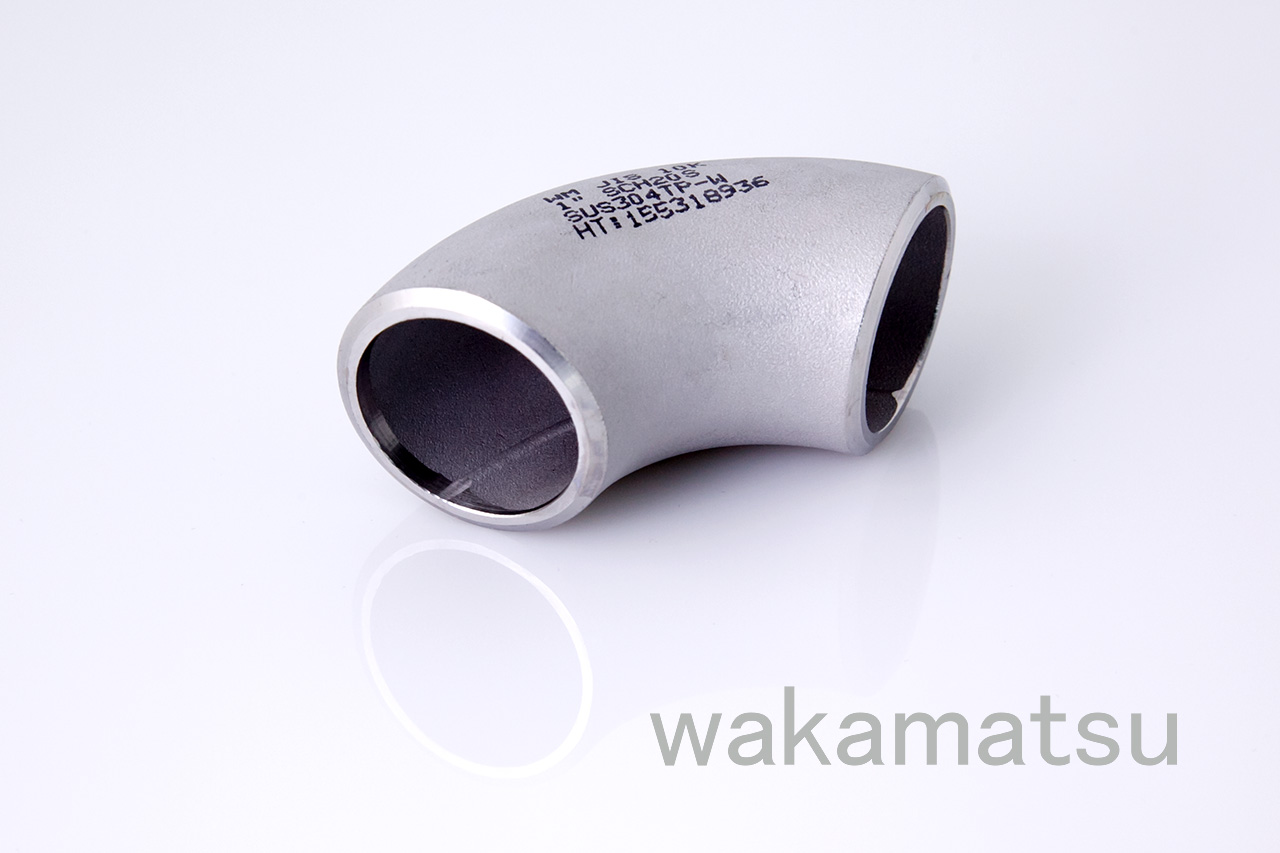 Stainless Steel Butt Weld Fittings RangeFull-penetration welded fittings eliminate leak risks and suit high-temperature, high-pressure, vacuum, and hygienic processes. This product line covers elbows, tees, reducers, and caps in matching schedules, providing consistent weld prep for reliable piping systems.View Product →
The company's butt-welding fitting range covers companion components, including elbows, tees, reducers, and caps, in matching schedules so weld prep stays consistent across a manifold.
The design limit of a cross is rarely the forging; it is the weld or thread boundary that the installer controls on site.
05 Writing a Cross Fitting Specification Vendors Can Quote Without Callbacks
A complete cross fitting specification needs six data points: connection type, nominal size, material grade, pressure class or schedule, governing standard, and quantity.
- Connection type: threaded, socket-weld, or butt-weld
- Nominal size: all four ports, especially for reducing crosses
- Material: 304/304L or 316/316L with mill certificate
- Pressure rating: Class 2000, 3000, or 6000, or schedule for butt-weld
- Standard: ASME B16.11, B16.9, or B1.20.1
- Surface finish: pickled and passivated for process lines
Some suppliers machine threaded crosses from bar stock, leaving a machined shoulder that creates a crevice and pressure drop. A forged cross has a smoother internal radius, so for hygienic and high-cycle services, write "forged" into the purchase order. Shanghai Ruosung Metal Products Co., Ltd. has held ISO9001 certification since 2008, which matters when an order requires documented quality control from raw material through final inspection.
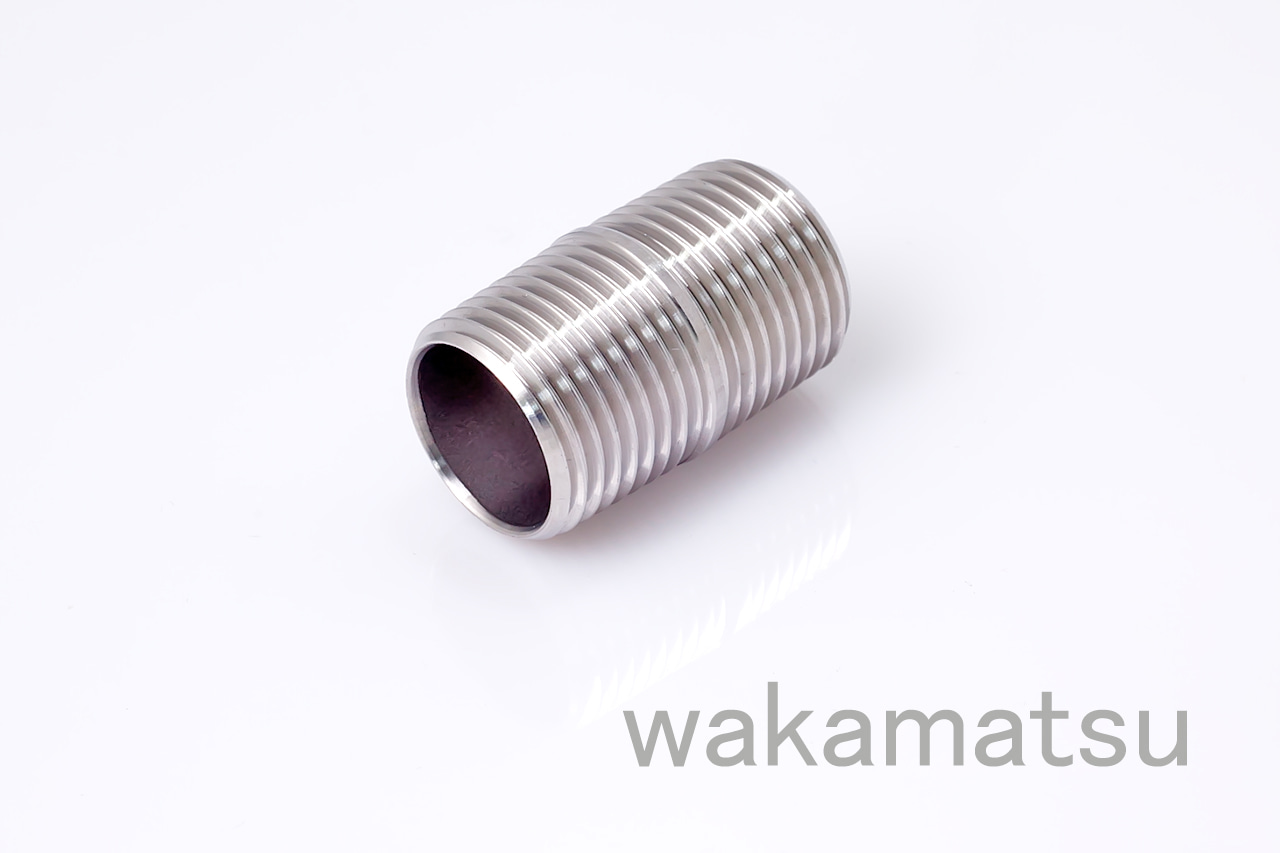 Stainless Steel Threaded Fitting NPT/BSPT SuppliersThese 304/316 threaded fittings provide leak-free connections under high pressure and harsh environments. Featuring forged options with smoother internal radii, the supplier's ISO9001-certified quality control makes them a dependable choice for petrochemical, food, and semiconductor applications.View Product →
For a single-source joint family that also includes bite-type fittings, quick connectors, and VCR connectors, the stainless steel joint catalog is the practical place to start when a manifold combines multiple connection technologies.
Specify the branch size first. Reducing crosses are dimensioned from the run, and an under-specified branch is the most common reason a quoted cross does not fit the manifold.
06 Frequently Asked Questions About Stainless Steel Cross Fittings
A stainless steel cross fitting is selected by connection type first, then material grade, then pressure rating. The four questions below cover the decisions that come up most often during procurement.
Can a stainless steel cross fitting be used as a header manifold?
Yes. A cross with one inlet and three outlets functions as a four-port manifold for cooling water, instrument air, or lubrication distribution, provided line size is calculated for simultaneous branch flow and the fitting is supported against vibration.
What is the pressure rating of a stainless steel cross fitting?
Threaded and socket-weld crosses carry Class 2000, 3000, or 6000 ratings under ASME B16.11; butt-weld crosses are rated by pipe schedule under ASME B16.9. Ambient temperature numbers must be derated for elevated service.
Is an equal cross stronger than three tees welded together?
In most cases, yes. A single forged cross has no longitudinal seam and distributes stress evenly around the hub, while multiple tees add weld seams, residual stress, and more leak boundaries.
When should I avoid a threaded cross fitting?
Avoid threaded crosses above 1000 psi, in high-vibration lines, or where chlorides attack thread sealants. Use socket-weld or butt-weld connections instead.
Related Products
Certificate Of Honor
If You Need More Help, Let Us Know.

ABOUT US
PRODUCTS
CAPABILITY
CONTACT US
- Phone: +86-21-59261529
- Email: sales@sh-wakamatsu.com
- Email: panhy@sh-wakamatsu.com
- Add: B3 Factory , Industrial Park, Jinze Town, Shanghai, China
Copyright © Shanghai Wakamatsu Metal Products Co., Ltd.
All Rights Reserved.Custom Stainless Steel Pipe Fitting Manufacturers, Suppliers