English
 日本語
日本語 中文
中文

Industry News
Home / News / Industry News / What Is a Stainless Steel Valve? Types, Grades, Selection & Industrial Applications
News
 Home / News / Industry News / What Is a Stainless Steel Valve? Types, Grades, Selection & Industrial Applications
What Is a Stainless Steel Valve? Types, Grades, Selection & Industrial Applications
 2026.08.14
 Industry News
Content
A stainless steel valve is a mechanical device used to start, stop, throttle, or isolate the flow of liquids and gases in a piping system, with all wetted components made from a corrosion-resistant stainless steel alloy. That is the short definition. The longer, more useful answer involves material grades, valve construction types, pressure-temperature ratings, and application fit — because selecting a stainless steel valve is rarely a one-size-fits-all decision.
When an engineer specifies a stainless steel ball valve for a chemical dosing line, or a maintenance crew replaces a corroded check valve in a water skid, the material choice usually comes down to corrosion resistance, mechanical strength, and lifecycle cost. Stainless steel valves deliver on all three, but only when the grade matches the service conditions.
What Makes a Valve "Stainless"?
A steel alloy is classified as stainless when it contains at least 10.5% chromium by mass. The chromium reacts with oxygen to form a thin, self-healing chromium oxide layer on the surface. This passive film is what gives stainless steel its corrosion resistance. When the surface is scratched or damaged, the film reforms as long as oxygen — or an oxidizing medium — is present.
For valves, two grades dominate:
- 304 stainless steel — the general-purpose grade. It handles water, mild chemicals, food products, and atmospheric corrosion well. SS304 valves are common in building services, food processing, and general industrial piping.
- 316 stainless steel — adds 2–3% molybdenum, which significantly improves resistance to chlorides, acids, and saltwater. For marine environments, chemical plants, and pharmaceutical applications, 316 is the default choice.
In cast form, 304 and 316 correspond to CF8 and CF8M respectively — designations you will often see on investment-cast or sand-cast stainless steel valve bodies.
A third consideration is carbon content. Low-carbon variants such as 304L and 316L reduce the risk of sensitization — chromium carbide precipitation at grain boundaries — during welding. For welded valve assemblies or valve ends that will be welded into the line, L-grades are often preferred.
Compared with carbon steel valves, stainless steel valves cost more initially, but they eliminate the need for frequent painting and corrosion allowance. In services where the fluid is water, steam, or mildly corrosive chemicals, the lower maintenance cost of stainless steel usually outweighs the higher purchase price within the first few years of service.
Common Types of Stainless Steel Valves
The term "stainless steel valve" covers a wide family of products. Each type is designed for a distinct flow control function. The table below summarizes the main families.
| Valve type | Primary function | Typical service |
|---|---|---|
| Ball valve | Quarter-turn on/off isolation | Water, gas, chemicals, process lines |
| Gate valve | Full-open or full-close isolation | Water distribution, oil and gas |
| Globe valve | Throttling and flow regulation | Steam, cooling water, control loops |
| Check valve | Prevents backflow | Pump discharge, drainage, process lines |
| Needle valve | Fine metering of small flow rates | Instrumentation, sampling, pilot lines |
Ball Valves
Ball valves are the workhorse of stainless steel flow control. A polished ball with a through-bore rotates 90 degrees to open or close the line. The quarter-turn operation is fast, the pressure drop is low, and the sealing performance is repeatable over many cycles. Stainless steel ball valves are widely used in water treatment, chemical metering, compressed air, and food and beverage lines.
For applications that require reliable shutoff in compact piping layouts, two-piece stainless steel ball valves are often the first choice because the two-piece body design allows easier maintenance and inspection without removing the entire valve from the line. The operating characteristics and common deployment of stainless steel ball valves in industrial systems are covered in more detail in our article on stainless steel ball valve applications.
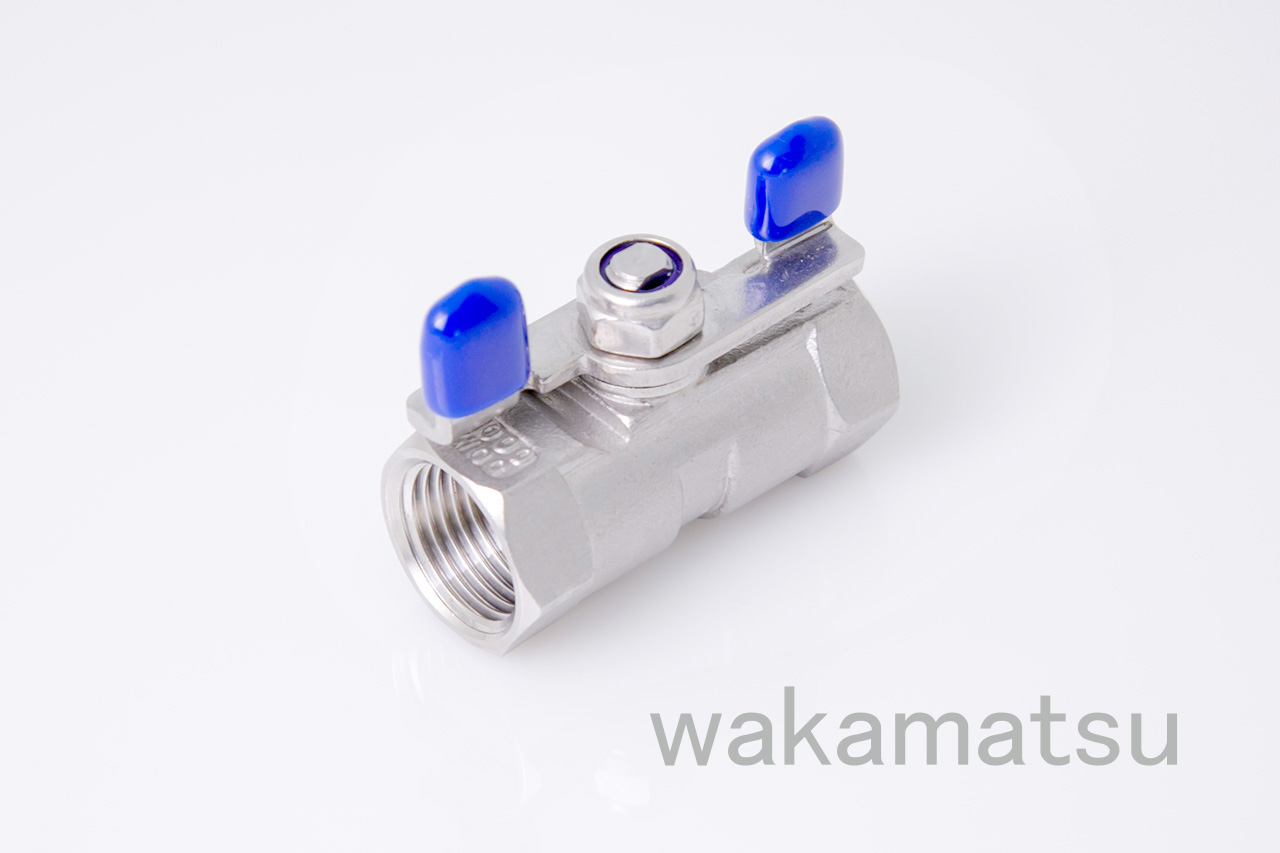 Custom OEM/ODM Wv101/Wv101b Stainless Steel One-Piece Ball Valve Manufacturers, Shanghai Wakamatsu Metal Products Co., Ltd. is China Custom OEM/ODM Wv101/Wv101b Stainless Steel One-Piece Ball Valve Manufacturers and ...View Product →
Gate, Globe, and Check Valves
Gate valves provide straight-through flow with minimal resistance when fully open. They are best used for isolation, not throttling. Globe valves, by contrast, use a linear motion disc and seat ring to regulate flow; the S-shaped internal passage creates a higher pressure drop but gives much better control. Check valves protect equipment and piping from reverse flow, using a swinging disc, lifting disc, or ball element that closes automatically when downstream pressure exceeds upstream pressure.
Needle Valves
Where precise flow control is needed — typically in instrument lines, chemical injection skids, or hydraulic systems — needle valves are the standard choice. Their tapered needle-shaped stem fits into a matching seat, allowing extremely fine adjustments of flow rate. Stainless steel needle valves such as precision needle valves with stainless steel bodies are valued for their repeatability and tight shutoff under moderate pressures.
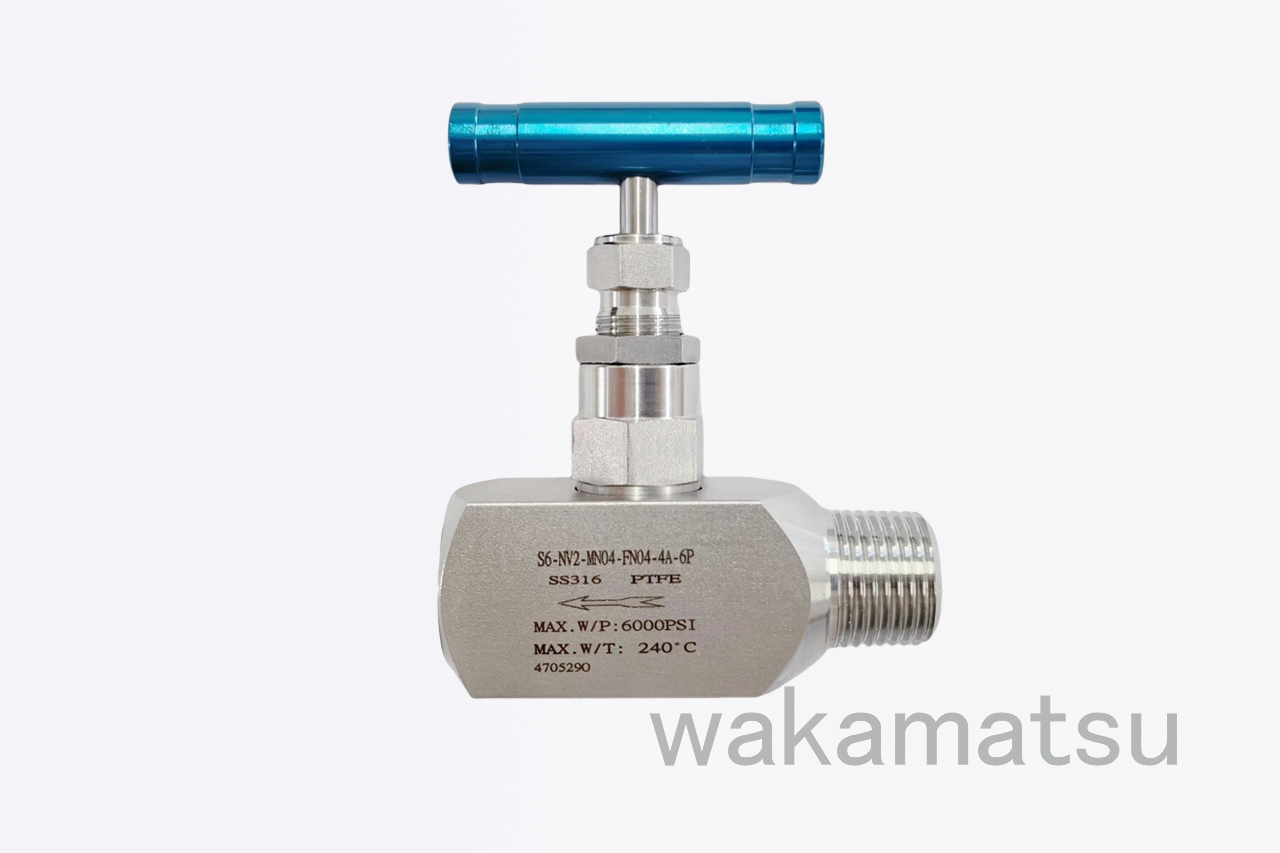 Custom OEM/ODM Stainless Steel Needle Valves Manufacturers, FactoryShanghai Wakamatsu Metal Products Co., Ltd. is China Custom OEM/ODM Stainless Steel Needle Valves Manufacturers and Factory,View Product →
Y-Type Strainers
Many valve failures are actually debris failures. A Y-type strainer installed ahead of a pump, control valve, or flow meter removes pipe scale, weld slag, and particulate matter from the line. The Y-shaped body directs flow through a mesh or perforated screen, and the screen can be removed for cleaning without disassembling the piping. Stainless steel Y-type strainers are commonly paired with valves in steam and process applications to protect downstream components.
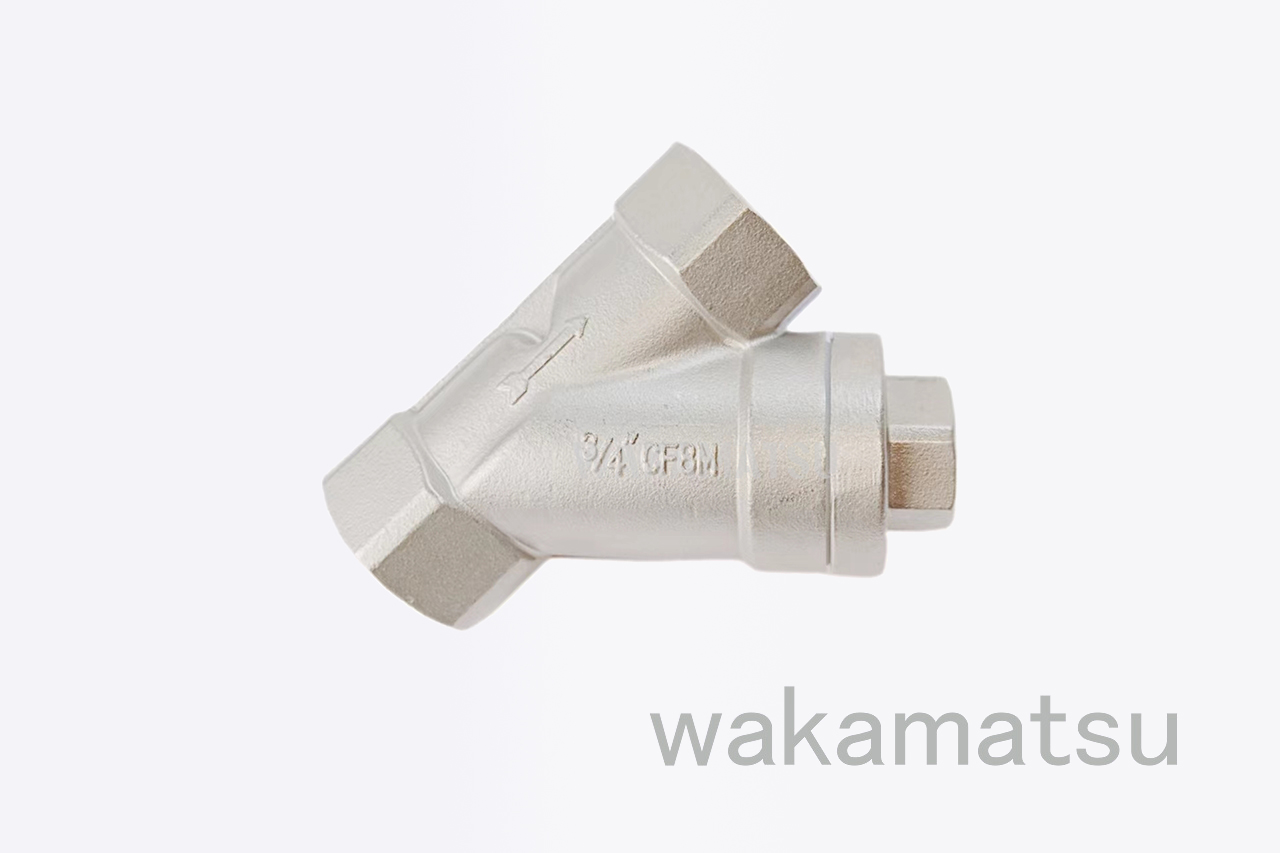 Custom OEM/ODM Wv701 Y-Type Stainless Steel Filter Manufacturers, FactoryShanghai Wakamatsu Metal Products Co., Ltd. is China Custom OEM/ODM Wv701 Y-Type Stainless Steel Filter Manufacturers and Factory, Mater...View Product →
Key Selection Criteria
Choosing the correct stainless steel valve requires more than picking a valve type. The following criteria determine whether the valve will perform reliably over its intended service life.
Pressure-Temperature Rating
Every valve has a rated pressure that decreases as temperature increases. A 150 lb rated valve, for example, is suitable for low-pressure water service but may not be acceptable for superheated steam at the same nominal pressure. Before selection, confirm the maximum operating pressure and the maximum operating temperature — and the combination of the two.
End Connections
The connection method must match the piping system and installation method:
- Threaded end connections are common in smaller sizes (up to 2 in.) and are fast to install. For chemically aggressive media, choosing the right corrosion-resistant stainless steel threaded fittings is just as important as the valve itself.
- Butt-welded ends provide a permanent, leak-tight joint suitable for high-pressure and high-temperature service.
- Socket-welded ends are used in smaller bore lines where a smooth internal bore is required.
- Flanged ends allow easy disassembly for maintenance and are preferred in larger sizes or where the valve must be removed frequently.
Seat and Seal Materials
The body material may be stainless steel, but the sealing performance depends on the seat, stem seal, and packing. PTFE seats provide excellent chemical resistance and low operating torque but have a limited temperature range. PEEK seats extend the temperature and pressure capability. For metal-to-metal sealing, on-off valves with ground seats offer a longer service life in abrasive or high-temperature services.
Flow Characteristic and Actuation
If the valve is used for regulation rather than isolation, its flow characteristic (linear, equal percentage, or quick opening) affects controllability. If the valve is automated, the actuator type — pneumatic, electric, or hydraulic — and the valve's operating torque determine the actuation speed and fail-safe behavior.
Where Stainless Steel Valves Are Used
Stainless steel valves appear in almost every industry that moves fluids or gases:
- Industrial facilities — cooling water, compressed air, steam, and chemical process lines rely on stainless steel valves for corrosion resistance and long service life.
- Medical equipment — clean gas delivery, analytical instruments, and pharmaceutical process lines require the low contamination and surface cleanability of stainless steel.
- Fire protection systems — reliable on/off control and corrosion resistance in water supply lines are critical.
- Building services and decoration — potable water, HVAC, and architectural piping systems across the world use stainless steel valves.
- Food and beverage processing — hygienic design and resistance to cleaning agents make stainless steel the standard.
- Marine and offshore — 316 and higher-alloy stainless steel valves resist saltwater corrosion where carbon steel fails quickly.
In all these settings, the common denominator is the same: the valve must not fail due to corrosion, and it must maintain reliable sealing and mechanical integrity over the life of the system.
What to Look for in a Supplier
The specification is only half the equation. The supplier's ability to deliver consistent quality is what determines whether the valve performs as designed. When evaluating a stainless steel valve manufacturer, these points matter:
- Quality management system — certification to ISO 9001 provides a baseline for process control, traceability, and corrective action.
- Material traceability — the supplier should be able to confirm the heat number and chemical composition of the stainless steel used in each product.
- Manufacturing capability — in-house CNC machining and finishing capacity give the supplier tighter dimensional control and shorter lead times than a purely trading operation.
- Application experience — a manufacturer with decades of experience in stainless steel components can advise on material grade, valve selection, and installation pitfalls.
For example, our range of stainless steel valves — including ball valves, the gate-globe-check family, needle valves, and strainers — is manufactured by a Japanese-owned company with ISO 9001 certification, in-house CNC machining, and more than 20 years of dedicated focus on stainless steel fluid components. That kind of track record is worth checking during supplier qualification.
The Bottom Line
A stainless steel valve is not a single product but a family of flow control components defined by material composition, valve geometry, and service rating. Choosing the right one means matching the valve type to the control function, the material grade to the fluid and environment, and the end connections to the piping system. When these three things align, stainless steel valves deliver decades of reliable service in some of the most demanding industrial applications.
Certificate Of Honor
If You Need More Help, Let Us Know.

ABOUT US
PRODUCTS
CAPABILITY
CONTACT US
- Phone: +86-21-59261529
- Email: sales@sh-wakamatsu.com
- Email: panhy@sh-wakamatsu.com
- Add: B3 Factory , Industrial Park, Jinze Town, Shanghai, China
Copyright © Shanghai Wakamatsu Metal Products Co., Ltd.
All Rights Reserved.Custom Stainless Steel Pipe Fitting Manufacturers, Suppliers