English
 日本語
日本語 中文
中文

In modern piping and mechanical systems, reliability, corrosion resistance, and installation efficiency are no longer optional — they are standard requirements. Stainless steel threaded connectors have become a preferred solution across industrial sectors due to their durability, versatility, and co...
READ MORE
Custom Stainless Steel Hoses Connector, Flexible Pipe Joints
Stainless Steel Hoses Connector, Flexible Pipe Joints Manufacturers
Providing the ultimate flexible and reliable solution for complex fluid transfer. Designed for demanding applications such as dynamic flexing, vibration absorption, high temperature and high pressure, and specialized media transport, this series of products is constructed from high-quality stainless steel, PTFE, and specialty rubber, offering exceptional resistance to corrosion, wear, and aging. Widely used in industrial equipment, automated machine tools, construction machinery, and the food and pharmaceutical industries, they ensure safe and efficient connections for conveying water, gas, oil, or chemical solvents, perfectly solving installation challenges in complex spaces.
-
Stainless steel connectors
-
Stainless steel threaded connector
- Nipple,VN/VLN stainless steel double-ended male connector
- Nipple,VWN/VWLN stainless steel single-ended male connector
- WMFB/WMFLB stainless steel female connector, extension connector
- Socket,WPTS/WPTSB thin stainless steel double-ended female connector
- Socket,WHPTS/WHPTSB stainless steel single-ended female connector
- Socket,VSO/VHSO stainless steel straight-through female connector
- Socket,WPS stainless steel thick-wall straight-through female connector
- WM6N stainless steel hexagon nipple connector
- WMRN Stainless Steel Hexagon Reducing nippe connector
- WSFG stainless steel hexagonal equal-diameter adapter
- WBU/WMBU stainless steel bushing connectors
- WMF stainless steel male/female adapters
- WMFR stainless steel male/female reducing adapter
- WMS stainless steel flanged female banded socket
- WMRS stainless steel reducing female connectors
- W-KN series stainless steel quick-connect connectors
- VRHN stainless steel round hose connectors
- VRH stainless steel welding hose connectors
- VHS stainless steel hose connectors
- VHJ stainless steel hose connectors
- VHN, WCH, WMCH stainless steel hexagonal male hose fittings
- WCHF stainless steel hexagonal female thread hose fittings
- WCHL stainless steel L-shaped hose fittings
- WMU stainless steel female union fittings
- WMU2 stainless steel external union fittings WMU2 stainless steel male union fittings
- WMU3 stainless steel female and male union fittings
- WMUL stainless steel female union elbow fittings
- WMUL2 stainless steel female and male union elbow fittings
- WML stainless steel 90° elbow fittings
- WMRL stainless steel reducing elbow fittings
- WMSL stainless steel male/female elbow fitting
- WM45L stainless steel 45° elbow fitting
- WMX stainless steel cross fitting
- WMT stainless steel tee fitting
- WMRT stainless steel reducing tee fitting
- WMT-FMF-1/2 stainless steel main/female branch/female tee fitting
- WMT-FFM-1/2 stainless steel main/double female branch/male tee fitting
- WMT-MMF-1/2 stainless steel main/double male branch/female tee fitting
- WMYT-1/2 stainless steel full female tee fitting
- WMP stainless steel square plug fitting
- WMHP stainless steel hexagonal plug connector
- WCP stainless steel inner hexagonal plug connector
- WC stainless steel round pipe cap
- WHC stainless steel hexagonal pipe cap
- Stainless Steel Bulkhead Fittings Tt Series Female Thread/Male Thread
- Stainless Steel Bulkhead Fittings TTM Series Male/Female thread
- WSFG stainless steel hexagonal equal-diameter adapter-副本
-
Stainless steel bite type fittings
- W - Ktz Stainless Steel Straight-Through Bite Type Fitting
- W - KTZR Stainless Steel Reducing Straight-Through Bite Type Fitting
- W - Ktzm Stainless Steel Straight-Through Male Thread Bite Type Fitting
- W - Ktzf Stainless Steel Straight Through Female Thread Bite Type Fitting
- W - Ktl Stainless Steel Elbow Bite Type Fitting
- W - Ktlm Stainless Steel Male Elbow Bite Type Fitting
- W - Ktlf Stainless Steel Female Thread Elbow Bite Type Fitting
- W - Ktt Stainless Steel Tee Bite Type Fitting
- W - Ktt - Tmt Stainless Steel Tee Bite Type Fitting TMT
- W - Ktt - Tft Stainless Steel Tee Bite Type Fitting TFT
- W - Ktt - Ttm Stainless Steel Tee Branch Male Threaded Fitting
- W - Ktt - Ttf Stainless Steel Tee Bite Type Fitting TTF
- W - Ktx Stainless Steel Four-Way Bite Type Fitting
- W - Ktz - Cb Stainless Steel Straight-Through Bite Type Bulkhead Fitting
- W - Ktc Stainless Steel Tube Plug
- W - Ktp Stainless Steel Ferrule End Plug
- W - Ktq Stainless Steel Ferrule Assembly
- W - Ktg Stainless Steel Tube
-
Stainless steel quick connector
- W-Ksa Stainless Steel Quick Connector
- W-Kse Stainless Steel Quick Connector
- W-Ksf Stainless Steel Quick Connector
- W-Ksdp Stainless Steel Quick Connector
- W-Ksc Stainless Steel Handle Quick Connector
- W-Ksd Stainless Steel Handle Quick Connector
- W-Ksb Stainless Steel Lever Type Quick Connector
- W-Ksdc Stainless Steel Handle Quick Connector
- Stainless steel VCR connector
-
Stainless steel threaded connector
-
Stainless steel valves
-
Stainless steel ball valve
- Wv101/Wv101b Stainless Steel One-Piece Ball Valve
- Wv102/Wv102b Stainless Steel Two-Piece Ball Valve
- Wv102fm Stainless Steel Two-Piece Female And Male Thread Ball Valve
- Wv103 Stainless Steel Three-Piece Ball Valve
- Wv104 Stainless Steel Three-Way Ball Valve
- Wv301 Stainless Steel One-Piece Flange Ball Valve
- Wv302 Stainless Steel Two-Piece Flange Ball Valve
- Wv201ff Mini Stainless Steel Female Thread Ball Valve
- Wv202mm Mini Stainless Steel Male Ball Valve
- Wv203fm Mini Stainless Steel Female And Male Thread Ball Valve
- Wv204hm Pagoda-Shaped Stainless Steel Mini Male Ball Valve
- Wv205hf Pagoda-Shaped Stainless Steel Mini Female Ball Valve
- Stainless steel Y-type strainer
- Stainless steel gate valve/globe valve/check valve
- Stainless steel needle valve
-
Stainless steel ball valve
-
Stainless steel BUTT-WELDING fittings
-
Stainless steel flange
- Hoses and flexible pipes
Grid
List
-
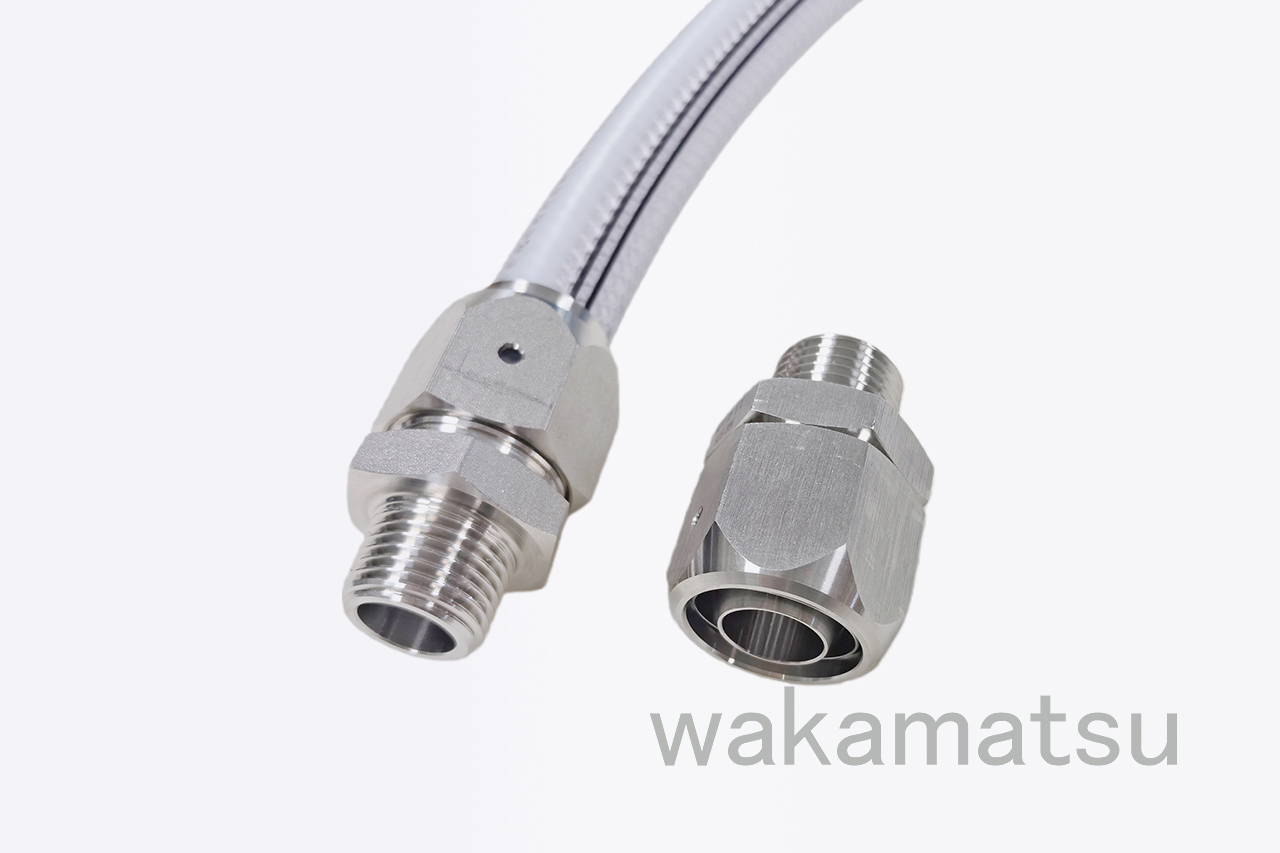 As a key connector in hose assemblies, this series of hose fittings is ideal for creating robust, leak-proof, and easy-to-install fluid systems. Crafted from high-strength stainless steel and carbon s...VIEW MORE
 -
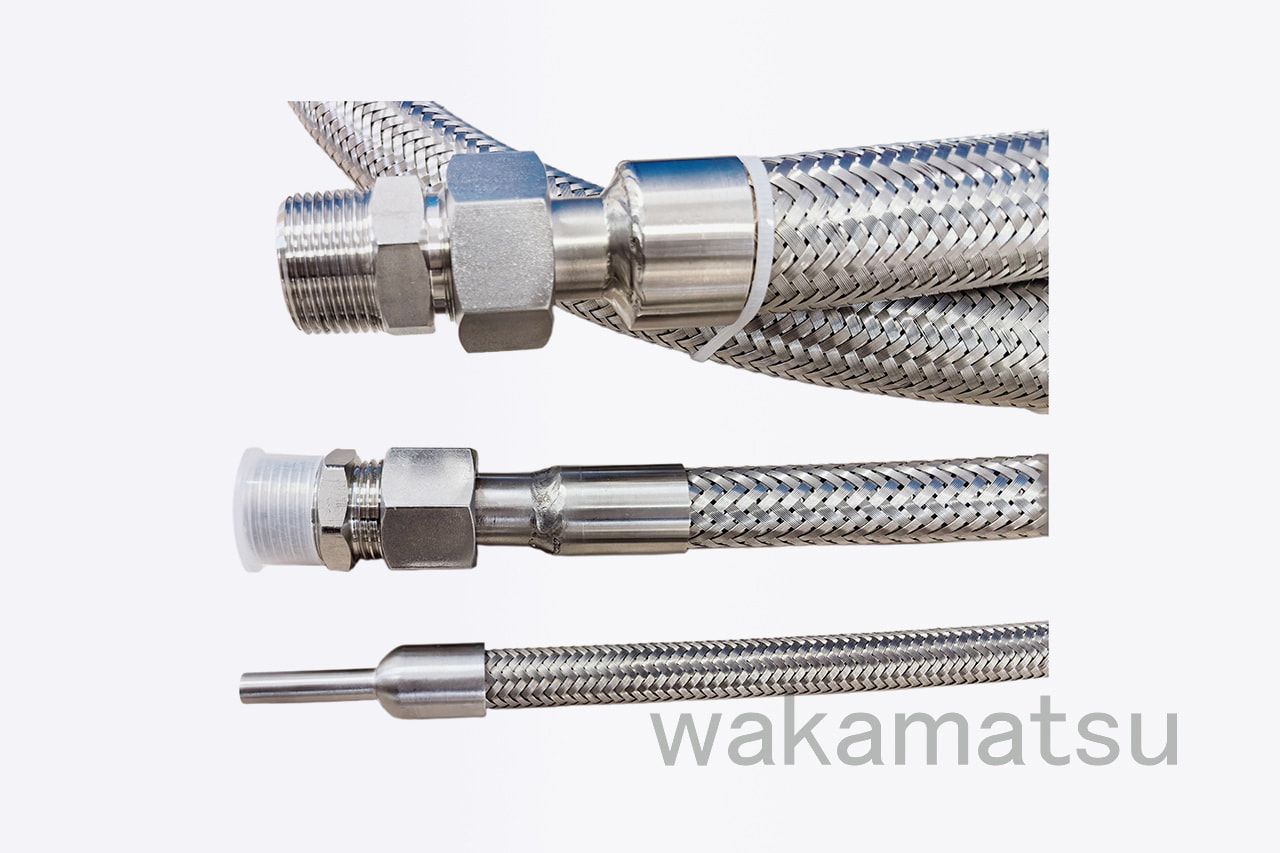 Designed specifically to protect piping systems, these connectors effectively compensate for displacement, absorb vibration, and reduce noise. These connectors feature a high-performance stainless ste...VIEW MORE
About Us
Shanghai Wakamatsu Metal Products Co., Ltd.
Founded in 2003, Shanghai Wakamatsu is a Japan-funded manufacturer specializing in stainless steel screwed fittings, valves, and bite type tube fittings.We are China Custom Stainless Steel Hoses Connector Manufacturers and OEM/ODM Flexible Pipe Joints Company.
With over two decades of industry expertise, we combine Japanese precision manufacturing with advanced production facilities to deliver high-quality solutions for global clients.
Our products are widely used in construction, industrial equipment, and safety systems, and are trusted by customers across Japan, Europe, and Southeast Asia.
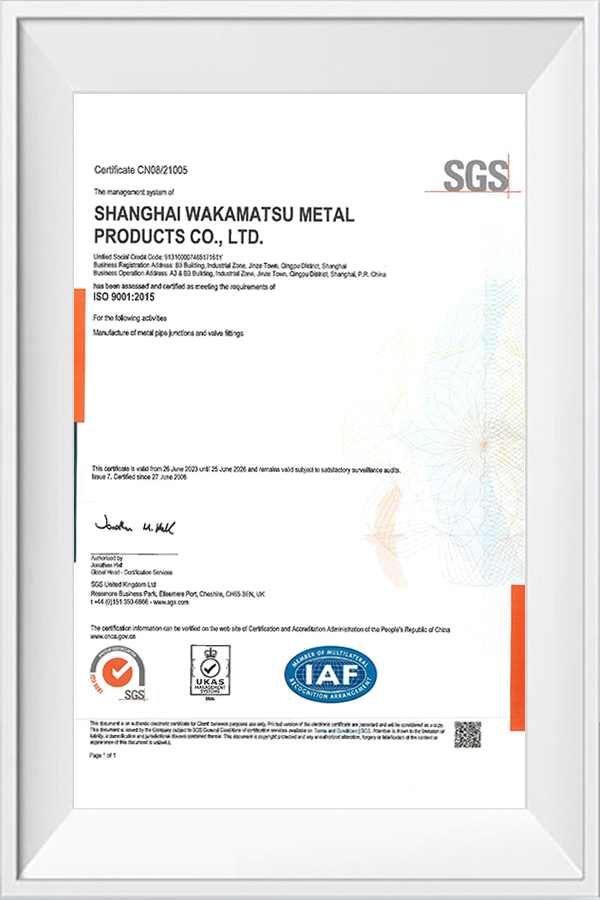
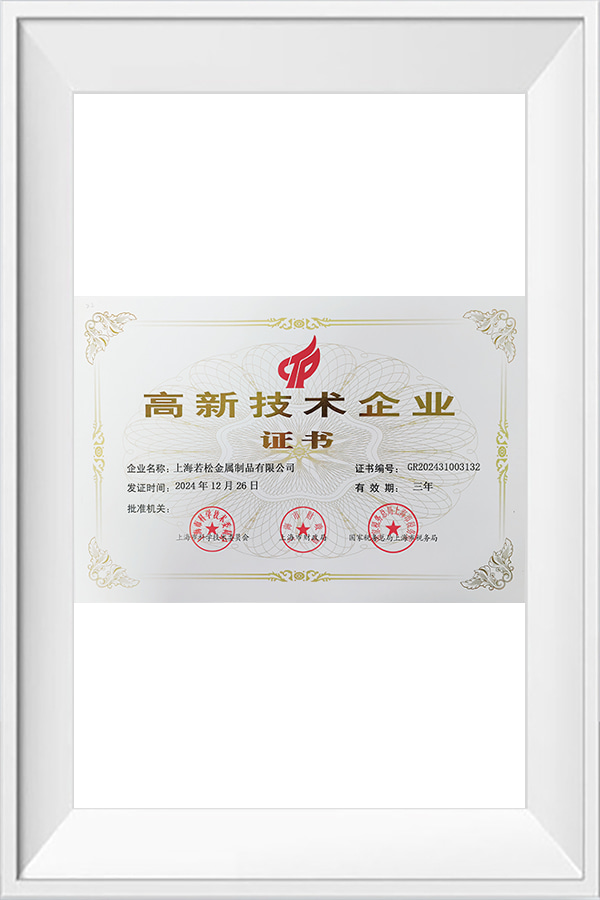
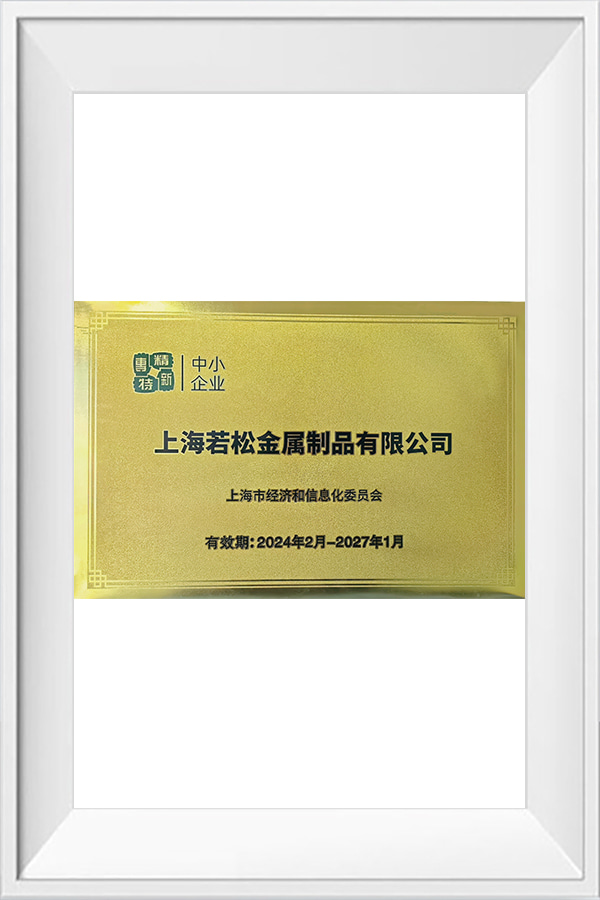
Certificate Of Honor
News
-
-
In various industrial applications, the choice of flange material is critical to ensure durability, strength, and long-term performance. Stainless steel flanges have become one of the most popular materials used in piping systems. But why is stainless steel often the material of choice? In this arti...
READ MORE -
In modern industrial production, precise control of fluids such as water, steam, oil, and chemicals is critical for safety, efficiency, and cost management. Among the many components used in fluid control systems, Stainless Steel Control Valves have become a preferred solution due to their durabilit...
READ MORE
Contact Us
Your suggestions and questions are highly valued by us. Please fill out the form below if you have any queries concerning the goods and services offered by Wakamatsu. We will get back to you as soon as we can.
Hoses and flexible pipes Industry knowledge
The Essential Guide to Flexible Pipe Joints and Stainless Steel Hose Connectors
In modern industrial systems, the reliability and durability of piping connections are paramount. Flexible Pipe Joints and Stainless Steel Hoses Connectors serve as critical components, widely used in various demanding environments to ensure the safety, flexibility, and longevity of fluid conveyance systems. This article provides an in-depth analysis of these two product categories, their characteristics, applications, and selection criteria. Located in the core of the Yangtze River Delta's ecological and green integrated development demonstration zone, Shanghai Wakamatsu Metal Products Co., Ltd. leverages its superior geographical advantages and advanced CNC machining capabilities to specialize in the R&D and production of high-quality stainless steel fittings and connectors for global markets including Japan, Europe, and America.
Comparative Analysis: Flexible Pipe Joints vs. Stainless Steel Hose Connectors
| Feature Dimension | Flexible Pipe Joints | Stainless Steel Hoses Connector |
| Primary Function | Compensate for pipeline displacement, vibration, thermal expansion/contraction; reduce stress; isolate noise and shock. | Provide flexible connection, adapt to complex routing and equipment movement; function for conveyance and protection. |
| Structural Characteristic | Typically metal (stainless steel, carbon steel) or rubber structure with flanged or threaded ends; allows multi-directional flexing. | Core of stainless steel bellows or braided mesh with end fittings (flange, thread, quick connector). |
| Key Advantage | High pressure resistance, high compensation capacity, long service life, low maintenance; suited for fixed piping systems. | Excellent flexibility, corrosion resistance, high/low temperature resistance, fatigue resistance; ideal for dynamic or complex layouts. |
| Typical Application Fields | Building water supply/drainage, HVAC, power plant piping, ship pipelines, petrochemical networks. | Chemical equipment, semiconductor manufacturing, food & beverage machinery, pharmaceutical lines, high-temperature steam transfer. |
| Key Selection Parameters | Working pressure, temperature range, compensation amount (axial/lateral/angular), connection type, media compatibility. | Bore size, pressure rating, temperature range, bellow type (welded/seamless), fitting type, length. |
| Material & Protection | Body: SS304/316L; Rubber joints: EPDM, NBR, etc.; optional anti-corrosion coatings. | Bellow & fittings: typically SS304/316L; optional braided mesh reinforcement (for pressure & abrasion resistance). |
Core Value and Application of Flexible Pipe Joints
Flexible pipe joints are designed to absorb vibration, compensate for movement, and isolate stress within piping systems. Their core value lies in protecting pipelines and attached equipment from damage caused by thermal expansion, settlement, or vibration.
Types and Selection Focus
- Metal Bellows Type: Often made of stainless steel, offering higher temperature/pressure resistance for harsh environments like steam and chemical lines.
- Rubber Expansion Joint Type: Excels in vibration damping and noise reduction, commonly used in building water systems and HVAC.
Critical selection parameters include compensation capacity, pressure rating, temperature adaptability, media compatibility, and fatigue life cycle rating.
Performance and Diverse Applications of Stainless Steel Hose Connectors
Stainless steel hose connectors are preferred for their corrosion resistance, flexibility, and strength. The typical construction combines stainless steel bellows, a braided sheath, and end fittings.
Industry-Specific Applications
- Semiconductor & Pharma: High-purity connectors with superior surface finish prevent contamination.
- Food & Beverage: Sanitary-grade connectors meet strict hygiene standards.
- High-Temperature Systems: Material stability ensures reliability in steam and thermal oil lines.
Selection must consider bellow type (seamless vs. welded), number of braid layers (affecting pressure and flexibility), end fitting style, and appropriate length based on minimum bend radius.
Industrial Selection Guide and Installation Advice
Correct selection and installation are crucial for optimal performance and safety.
- Conduct System Analysis First: Define all operating parameters (pressure, temperature, media, vibration frequency, displacement direction).
- Consider Environmental Factors: Account for external corrosion, UV exposure, and risk of mechanical damage.
- Verify Compatibility: Ensure material compatibility with the media, adjacent pipes, and equipment.
- Follow Installation Specifications: Avoid over-extension or compression; install in a neutral state.
- Implement a Maintenance Schedule: Periodically inspect joint condition and replace aged components promptly.
FAQ
What is the difference between a flexible pipe joint and an expansion joint?
The terms are often used interchangeably, but there is a subtle distinction. An expansion joint is a specific type of flexible pipe joint primarily designed to absorb thermal expansion and contraction in pipelines. It provides controlled movement in axial, lateral, and angular directions. Other flexible joints, like rubber vibration isolators or stainless steel hoses, might prioritize damping vibration or accommodating misalignment over large thermal movement. Essentially, all expansion joints are flexible pipe joints, but not all flexible pipe joints are solely expansion joints.
How do I choose between a braided and an unbraided stainless steel hose?
The choice hinges on pressure rating and mechanical protection requirements. A braided stainless steel hose features one or more layers of stainless steel wire mesh over the bellows. This braid significantly increases the hose's pressure capacity and burst strength while providing excellent abrasion and mechanical damage resistance. An unbraided hose (just the corrugated bellows) offers maximum flexibility but is suitable for much lower pressure applications or where the hose is fully protected from external damage. For most industrial dynamic applications involving medium to high pressure, a braided hose is the standard and safer choice.
What are the key signs that a flexible pipe joint needs replacement?
Regular inspection is vital. Key failure signs include:
- Visible Leakage: The most critical sign, indicating seal or bellows failure.
Excessive Deformation:
- Permanent stretching, compression, or offset beyond the joint's designed movement limits.
Cracks, Tears, or Corrosion:
- On rubber joints, look for surface cracks. On metal bellows, check for pitting corrosion or stress cracks, especially at the root of convolutions.
Loss of Flexibility:
- The joint feels stiff and no longer moves freely, which can transfer harmful stresses to the system.
Deterioration of Flange Bolts/Gaskets:
- Loose, corroded bolts or degraded gaskets compromise the seal.
Proactive replacement based on service life recommendations (cycles/hours) is often better than waiting for visible failure.
Can stainless steel hose connectors be used for high-purity applications like ultrapure water?
Yes, but they must be specifically designed for it. Standard industrial hose connectors may introduce contaminants. For high-purity applications in semiconductor, pharmaceutical, or biotech industries, specify:
- Electropolished Interior (EP): A process that micro-smooths the surface (achieving a low Ra value) to minimize particle adhesion and bacterial growth.
- High-Grade Material: 316L stainless steel with low carbon content to prevent corrosion.
- Seamless Bellows: Welded bellows have internal weld seams that can trap media; seamless bellows are superior for purity.
- Validated Cleaning & Packaging: The product should be cleaned, bagged, and certified in a cleanroom environment.
Manufacturers like Shanghai Wakamatsu, supplying to high-tech global markets, often offer such specialized product lines.
What is axial, lateral, and angular movement in flexible joint specifications?
These are the three fundamental types of movement a flexible joint is designed to accommodate:
- Axial Movement (Compression/Extension): Movement along the longitudinal axis of the pipe—pushing together or pulling apart.
Lateral Movement (Offset):
- Parallel movement where the two pipe ends are offset from each other but remain parallel.
Angular Movement (Deflection):
- Movement where the axes of the two pipe ends are no longer aligned, forming an angle.
A joint's specification sheet will list its maximum allowable values for each, often simultaneously. Proper selection requires calculating the expected system movements in all three directions to ensure the chosen joint can handle the combined load without over-stressing.
If You Need More Help, Let Us Know.

ABOUT US
PRODUCTS
CAPABILITY
CONTACT US
- Phone: +86-21-59261529
- Email: sales@sh-wakamatsu.com
- Email: panhy@sh-wakamatsu.com
- Add: B3 Factory , Industrial Park, Jinze Town, Shanghai, China
Copyright © Shanghai Wakamatsu Metal Products Co., Ltd.
All Rights Reserved.Custom Stainless Steel Hoses Connector Manufacturers